Past Exhibitions - 2020
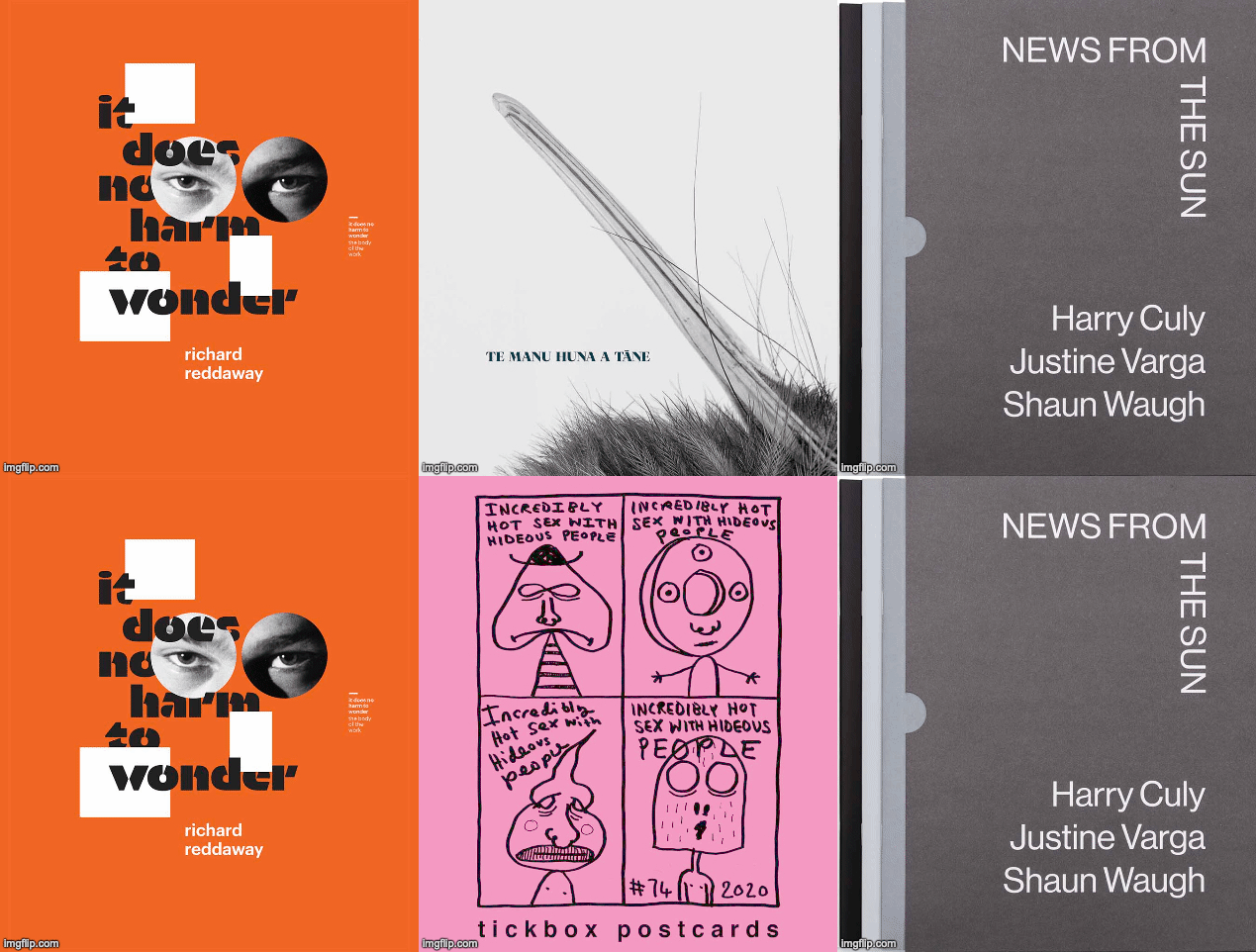
Four Publications, some word
5.00 - 7.00pm Monday 7th December
The Engine Room and Whiti o Rehua School of Art invite you to celebrate four 2020 publication projects: Te Manu Huna a Tāne by Jenny Gillam and Eugene Hansen; Incredibly Hot Sex With Hideous People by Bryce Galloway; It does no harm to wonder / the Body of the Work by Richard Reddaway; and News From the Sun by Harry Culy, Justine Varga, and Shaun Waugh.
There will be art, refreshments, and a reading by Martin Patrick from his new work in progress.
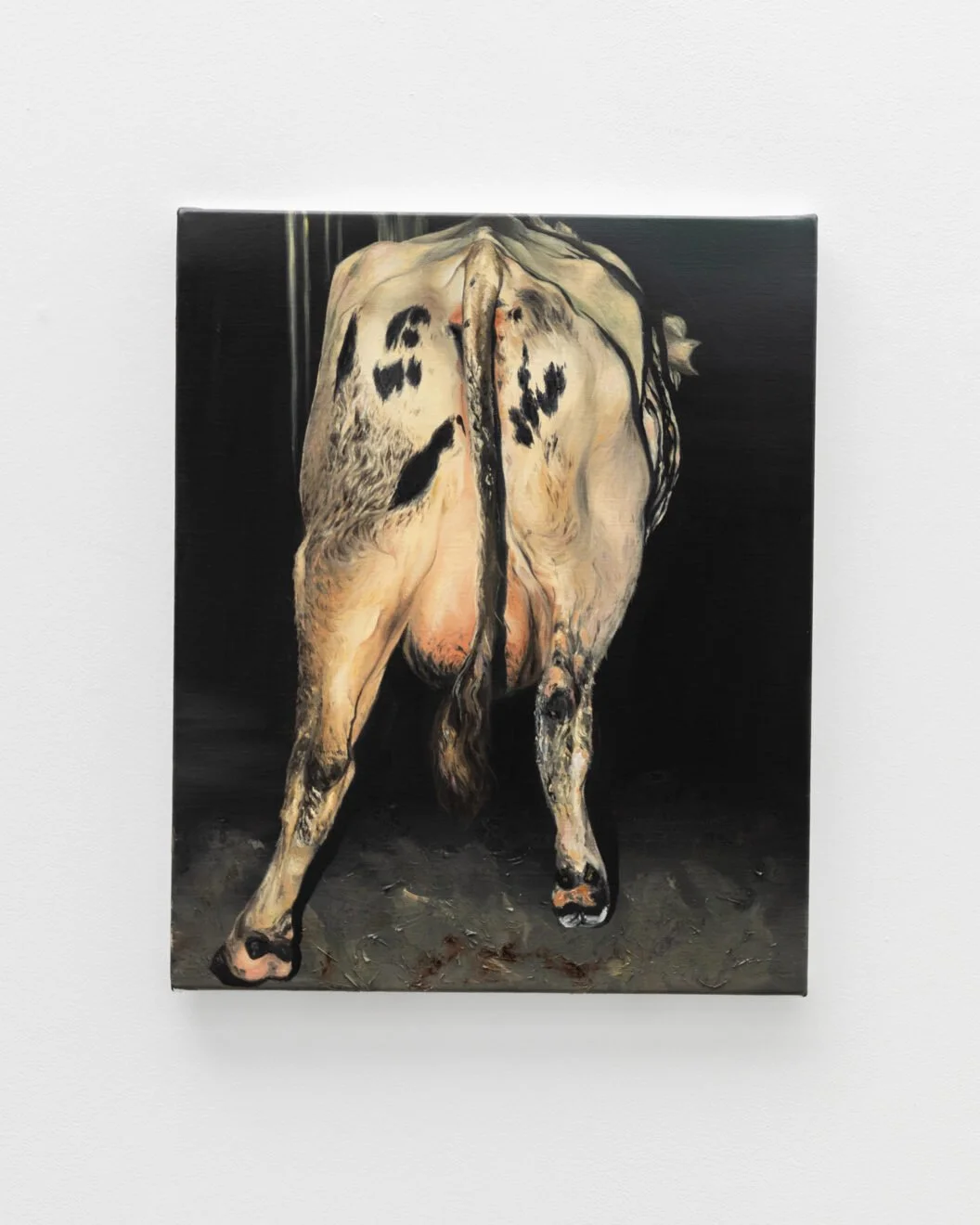
HOW NOW?
SIÂN STEPHENS
SABINA RIZOS-SHAW
30 SEPTEMBER — 16 OCTOBER 2020
How Now? provides an immersive multimedia experience, challenging how one thinks and feels about the unnatural processes integral to the dairy and beef industries. The viewers are given an opportunity to adorn a cow udder as they walk through the show, which displays jarring yet satirical depictions of the realities of the dairy industry’s practices. Engaging with understandings of consent and playing with the concepts of commodity fedishism, sultry fascination, and morbidly hilarious denial. The exhibition provokes empathy, and puts the viewer in a position to become a non- human animal for a short time, in a fresh and humorously irreverent way.
Sian Stephens and Sabina Rizos-Shaw are two Te Whanganui-a-Tara based artists, who studied Fine Arts at Massey University and graduated in 2018. They have previously collaborated on the projects Eye of the Bovine and Atom Heart Mother. They both love cows.
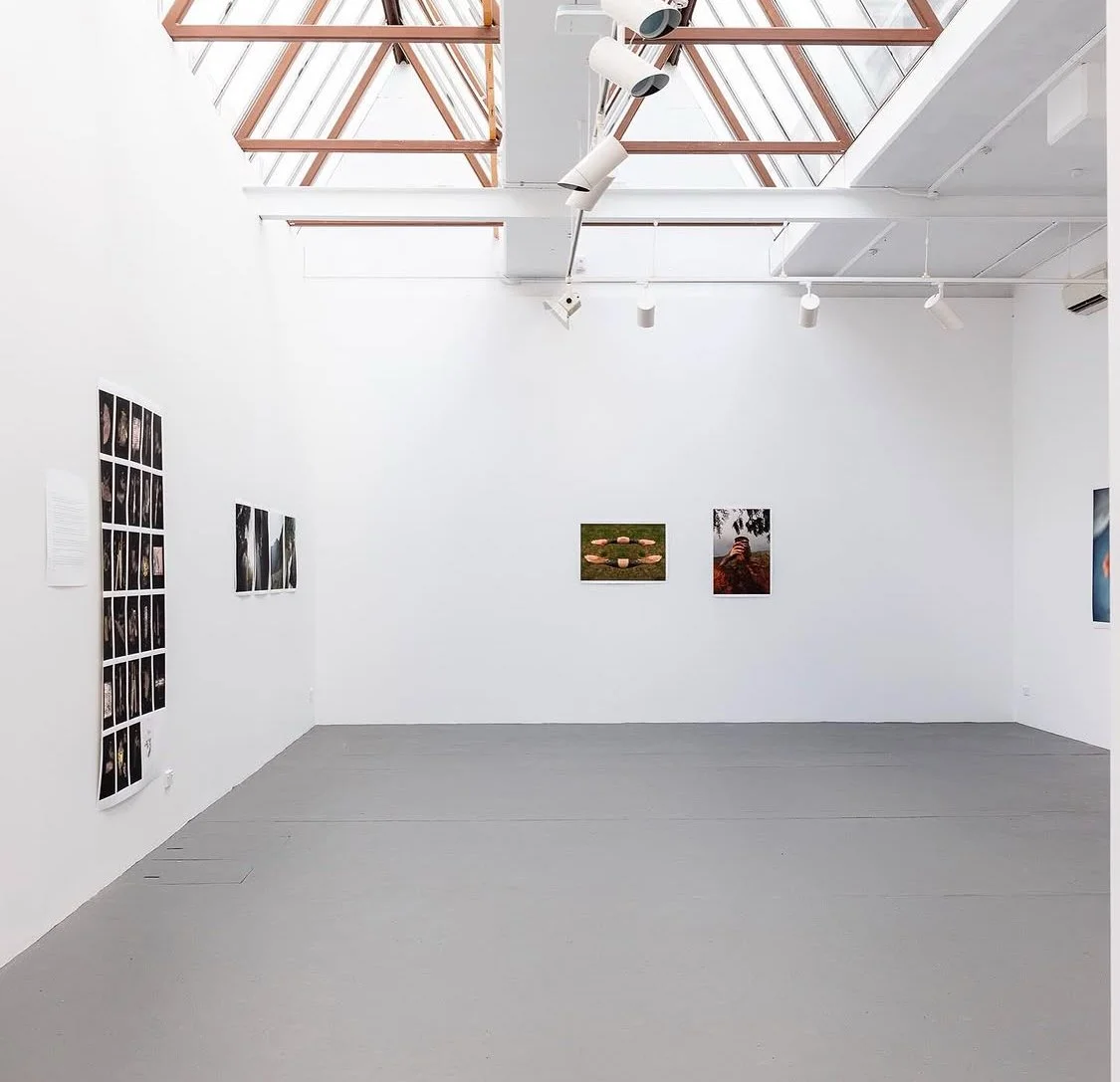
QUICKEN;
POPPY LEKNER, BRIARNA MARTELLETTI, JOHANNA MECHEN, MIZUHO NISHIOKA, MARIA SAINSBURY, DEIDRA SULLIVAN & VIRGINIA WOODS-JACK
22 JULY — 14 AUGUST 2020
Quicken is an exhibition of photographic work engaging touch and tactility. Photography can sometimes seem like a barrier to intimacy and closeness, too often we put a camera between ourselves and the world and it becomes an obstacle, an obstruction. Yet a photograph is only made because light touches something which is sensitive to it; we may not see the magic, but every time a photograph is made this touch happens. Quicken includes work which utilises photography’s direct relationship to light, incorporating photograms, chemigrams and photographic ‘mistakes,’ but touch is also a concept that ranges through the physical to the emotional, and other work in the exhibition engages relationships with family, friends, home and the artist’s own unwell body.
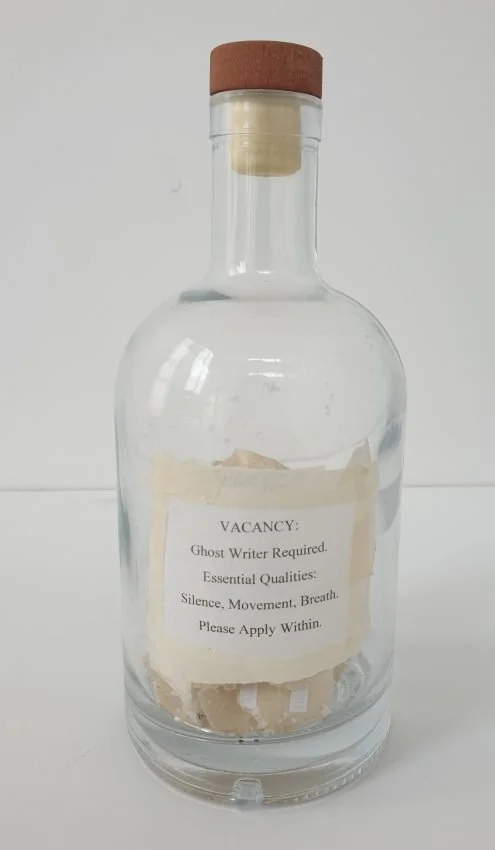
GHOST WRITING
19 FEBRUARY — 28 FEBRUARY 2020
GHOST WRITING is an installation which explores books and book pages as performative artefacts, and simultaneously discovers the narrative potential of fragmented fictional texts. The hybrid processes used to create this installation incorporate conceptual art practice and fiction writing. In GHOST WRITING, the reader re-writes the text as they read it. The reader/viewer is encouraged to performatively engage with the installation by exploring what is visible, partially visible, and concealed. To spend time touching and reading words, whispers, silence.
HOW TO GHOSTWRITE:
Invite no witnesses.
Write the one story that haunts you so much you can’t tell it.
Replace the ink cartridge of a photocopier.
Place your untellable story face down on the glass.
Place paper that shouldn’t go through a photocopier into the paper tray.
Press copy. Wait. Move the story. Stop.
Place the copy in the paper tray. Layer the story on one page.
Repeat 6) 7) till the layered story becomes invisible; a ghost, in ink.
When the story is illegible, burn it, drown it, hang it or bury it.
Take a breath.
Look elsewhere.
Write a story that you desperately want to tell.
Find the ghost in the story and ask it, ‘what do you want to be next?’
AND YOU CAN’T QUITE REMEMBER HOW YOU GOT HERE
ALI MASLEN
ANGERLIA OLIVER
CIARAN BANKS
ELLA HARRINGTON KNAPTON
HANNAH GREENWOLD
JAC TRĮNH
OLIVIA SILBY
COCO SARGENT and KATA BROWN
Framed by Ali Maslen’s writings, this exhibition is a consideration of routine, ritual and repetition. The works examine art practice as a form of introspection, engaging with therapeutic ideas and reflection. And you can’t quite remember how you got here, encourages us to turn inwards, reflect on what we bring into our lives, and what we are putting out into the world. A point to stop and rest as you sit with the artworks. An exploration of method and what it means to produce art from a personal place.
22 June — 1 July 2022
Before
Kate Te Ao
Te Ao locates her sculptural practice in relation to notions of anti-form as discussed by Robert Morris. Rather than being a direct or didactic expression of ideas, her sculptural works occupy a processual and generative space in which materials, space and symbols combine to open imaginative territory.
As part of this exhibition Te Ao has commissioned a new piece of poetry by Ashleigh Young. The exhibition takes its name, Before, from the title of Young’s poem.
Young is the author of two poetry collections, Magnificent Moon and How I Get Ready, and one essay collection Can You Tolerate This? She works as an editor at Te Herenga Waka University Press. Her recent writing has appeared in The Spinoff, Woman Magazine and The Guardian. She blogs at eyelashroaming.com
12—27 May 2022
Passing
Jane Wilcox
Ginell Sim
Connah Podmore
28 March - 8 April 2022
This exhibition draws together three artists, Ginell Sim, Connah Podmore and Jane Wilcox, all working in different media, but dealing with all or part of, the passing of light across a surface, of passing from this world and the passing of time.
Ginell Sim’s Grave Blankets. These works show a series of large cyanotype prints. The works exhibited play with light and its obstruction as a way to record and connect with those who have passed on, contemplating light, shadow, life and death. For this project the chemical coated fabric was laid on the grave sites of the artist’s family members and exposed to the sun. The visible imprints made from flowers is a result of the obstruction of light. This negative image allows a window to the soil below while the positive image records all above, allowing the most opportunity for the recording of spirits.
@ginell_sim
Connah Podmore presents a series of drawings of stripped-back night-time scenes. This series continues from an established line of work investigating interior surface, light and shadow. Although these scenes are taken from her family home, usual indicators of inhabitation have been stripped back and obscured, to place focus on the passing of light; and in doing so, she creates an almost desolate domesticity. Podmore created these drawings over a period of years when her children were young and she was with them at home and up with them late at night. This series is a reflection on that time, and aims to draw attention to the beauty and depth present in the ordinary and unremarkable.
@connah.podmore
Jane Wilcox’s images are from her newly published book ‘Between Dog and wolf’. All these images have taken within this very short time period of dusk, in Wellington, around the narrow paths and walkways and the gardens, The Botanical Gardens and Wilton Bush. These are spaces that we walk through often to and from work, or to relax, play in, they are often spaces we revisit to connect ourselves to the environment externally and internally.
It is a time of the in between, of day and night, of light and dark. Every culture has myths, fables and stories around this time. Patupaiarehe, fairies, elves, mythical creatures who emerge to be seen within this very short time, away from the glare of the day but before the darkness falls. A time when birds sing, hunt, meet before darkness falls, a magical almost mystical period when time is caught before suddenly it has moved on.
@jwilcoxpics